.png)
PMOS/PCOS and the "Metabolic Mouth. "Mirror, Mirror on the Wall: Your Mouth as a Reflection of Your Hormones

Updated: May 19
If you have been navigating the unpredictable swings of hormonal fluctuations, you already know how exhausting it can be. For years, you may have been quietly carrying the heavy burden of managing symptoms like irregular cycles, stubborn weight changes, daily fatigue, or persistent adult acne.
When you are already managing a list of systemic issues this long, sitting in the dental chair and being told you also have receding gums, a new cavity, or enamel wear can feel incredibly discouraging. It can feel like just another thing you have to fix.
I completely understand this exhaustion. I wish I had known how to address my own hormonal imbalances with a true, root-cause solution years ago, rather than just feeling like I was playing a game of whack-a-mole as new symptoms appeared.
But I want to offer you a different perspective today. What if your dental struggles aren't just a separate, isolated problem? The truth is, your mouth and your metabolism are intimately connected. Your oral health issues are not a personal failing; they are simply the visible signs of the exact same systemic inflammation and hormonal shifts driving your other symptoms.
This means there is a silver lining: as you begin to heal your metabolism, you may find that your chronic dental issues naturally begin to resolve right alongside it.
Why Now?
The medical community is finally catching up to this reality. A recent landmark consensus published in The Lancet officially renamed the condition from PCOS to Polyendocrine Metabolic Ovarian Syndrome (PMOS) to reflect that it is a systemic metabolic disorder deeply rooted in insulin resistance. This historic update was the culmination of a 14-year global research effort, validating the lived experiences of the more than 170 million women worldwide who are affected by it.
The Root Cause: Why Your Mouth is Reacting
Most of us were taught that oral health is simply a matter of brushing twice a day and avoiding sugar. Because of this, getting a frustrating report from the dentist can easily feel like a personal failure. But if you are dealing with Polyendocrine Metabolic Ovarian Syndrome (PMOS)—the updated medical term for PCOS—your mouth is highly sensitive to the changes happening beneath the surface.
There are three main reasons your hormones are impacting your smile:
Insulin Resistance: High insulin acts as an inflammatory trigger throughout your entire body. It directly impacts the delicate tissues of your mouth and changes the balance of your oral bacteria.
Hormonal Shifts: Elevated hormones, which are very common in PMOS, can disrupt your normal immune responses and slow down how quickly your gums heal.
Nervous System Stress: PMOS often keeps the body stuck in a state of chronic stress. This "fight or flight" response drastically changes your saliva flow, how you breathe, and the muscle tension in your jaw.

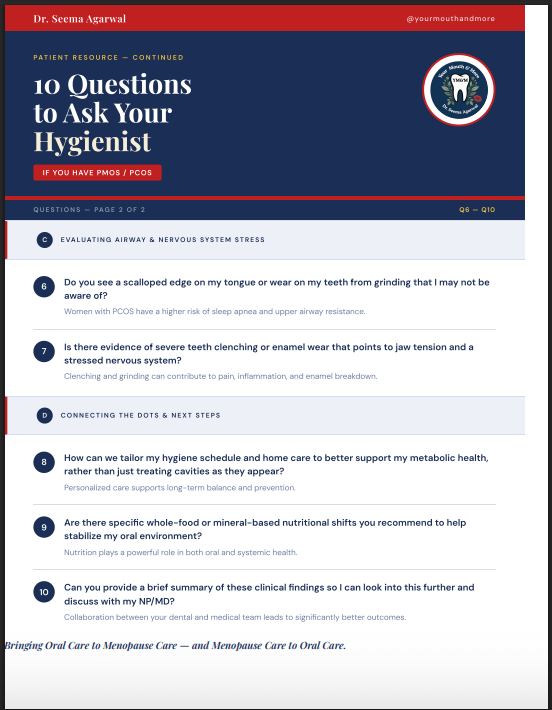
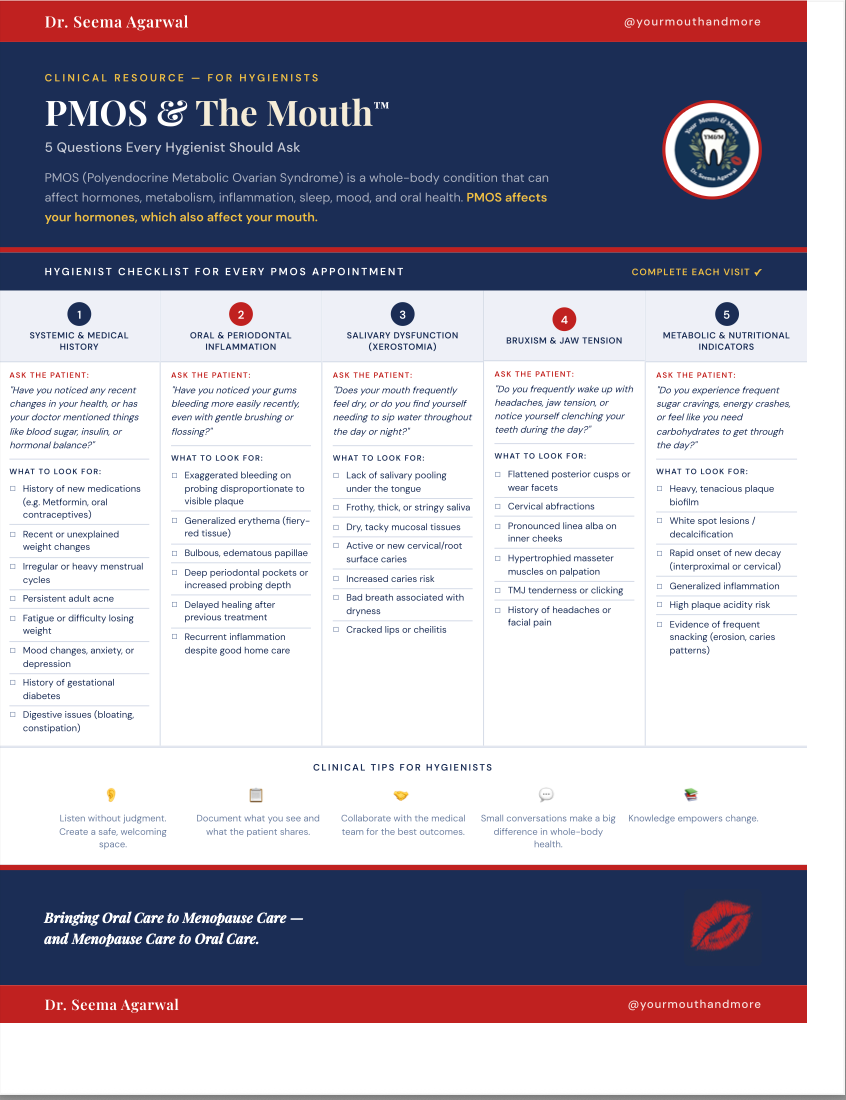
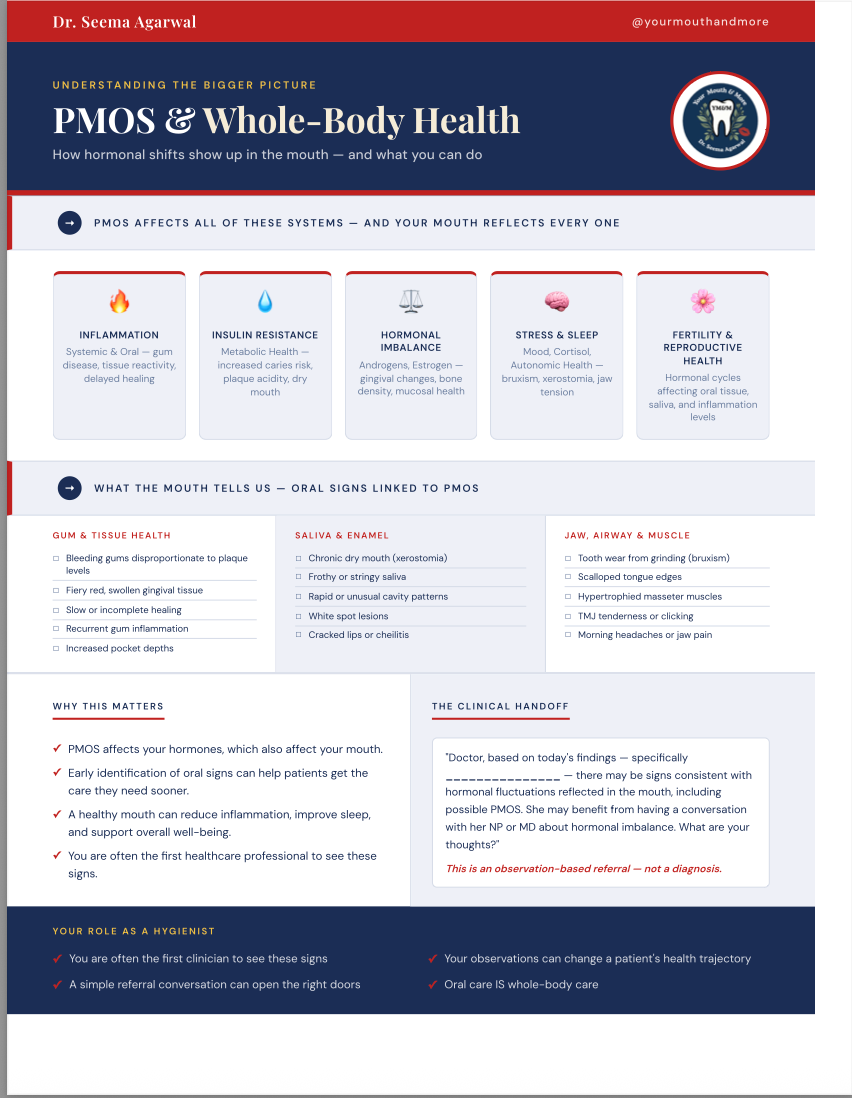
5 Signs of PMOS in the Dental Chair - the mouth as a Mirror
When you understand the mind-body connection, it becomes clear that your dental struggles are physiologically driven. Here is what your mouth is trying to tell you—and why it is absolutely not your fault.
1. Bleeding Gums (Periodontal Inflammation)
What you might be experiencing: It can be so frustrating to brush and floss diligently, only to leave the dentist with a report of bleeding or puffy gums.
The Reality: This is not a failure of your oral hygiene. When your body is battling chronic inflammation and insulin resistance, your immune system is already on high alert. Your gums become overly sensitive, launching a large inflammatory response to even tiny amounts of normal plaque. Your bleeding gums are simply a distress signal from your immune system.
2. Chronic Dry Mouth (Salivary Dysfunction)
What you might be experiencing: You may constantly feel the need to carry a water bottle, wake up with a parched throat, or notice your mouth feels tacky or sticky throughout the day.
The Reality: Saliva is your mouth's natural healing serum. When PMOS keeps your nervous system stressed, your body diverts energy away from resting functions like producing saliva. This dryness strips your teeth of their primary defense against decay and creates an environment where harmful bacteria thrive.
3. Unrefreshed Sleep (Airway Issues)
What you might be experiencing: Waking up feeling just as exhausted as when you went to sleep, struggling through afternoon brain fog, or being told that you breathe heavily or snore.
The Reality: The metabolic shifts of PMOS increase the risk of airway collapse and Obstructive Sleep Apnea. When your airway is compromised, your brain is repeatedly starved of oxygen, pulling you out of deep, restorative sleep. This oxygen deprivation further spikes your stress hormones the next day, fueling the frustrating PMOS cycle.
4. Teeth Clenching (Bruxism and Jaw Tension)
What you might be experiencing: Waking up with a dull headache, tension radiating down your neck, or a sore jaw. You might catch yourself aggressively clamping your teeth together while driving or working.
The Reality: Chronic clenching is rarely just a bad habit; it is a neurological survival response. If your airway is collapsing at night, your brain commands your jaw muscles to push forward and clench to force the airway open so you can breathe. Additionally, chronic systemic stress leaves your nervous system physically bracing for impact, locking tension directly into your facial muscles.
5. High Cavity Rates (Carbohydrate Cravings)
What you might be experiencing: Experiencing sudden, overwhelming cravings for sweets, feeling shaky if you miss a meal, and facing the guilt of new cavities despite trying to cut back on sugar.
The Reality: Sugar cravings in PMOS are a physiological demand, not a lack of willpower. Because your cells are resistant to insulin, they are starving for energy, causing your blood sugar to crash and triggering intense cravings. These frequent carbohydrate hits constantly feed the specific oral bacteria that cause rapid decay.
Taking Back Control: Healing the Whole Woman
The beauty of recognizing this connection is that you no longer have to fight these issues in isolation. You cannot out-brush or out-floss systemic inflammation, but you can support your body in a way that heals both your metabolism and your mouth.
Nourish to Stabilize: Instead of restricting food, focus on eating to stabilize your blood sugar. Meals rich in whole-food proteins, healthy fats, and fiber simultaneously starve cavity-causing bacteria while lowering your systemic insulin levels.
Breathe and Regulate: Emphasize nervous system regulation. Practices like dedicated nasal breathing, mindfulness, and yoga help shift your body out of "fight or flight," reducing stress, easing jaw tension, and restoring healthy saliva flow.
Your mouth is offering a clear, honest map of your systemic health. It is time to stop viewing dental visits as simple cleanings and start seeing them as a crucial component of your overall PMOS management strategy. Advocate for yourself. Request comprehensive metabolic bloodwork from your medical doctor, and bring those results to your dental visits. Seek out a functional dental team that looks at the "big picture" of your airway, sleep, and metabolic health.
I am speaking to you today not just as a healthcare provider, but as a woman and as a Dentist | Researcher | CYT who looks back and reflects deeply on what I have seen both clinically and personally over the years. I know how heavy this journey can feel, but I also know that when we connect these dots, true, root-cause healing is absolutely possible.
Take the Next Step: Your Free Clinical Guide
Taking control of your health means asking the right questions. To help you advocate for yourself, I have created a free, printable guide: 10 Questions to Ask Your Hygienist if You Have PCOS/PMOS.
Save this checklist to your phone or print it out, and bring it to your next dental appointment. Let it be the starting point for a bigger, better conversation about your metabolic wellness.
2

Comments